WORSHIP WITH US! 9:00 AM AND 11:15 AM WORSHIP SERVICES

Signed in as:
filler@godaddy.com

Christopher Wren was one of England’s most famous architects in the mid 1600’s. Wren, a scientist, scholar and architect planned the entire city of London and rebuilt over 50 churches. Wren is most known for being the architect of St. Paul’s Cathedral in London following the great fire in 1666. His first 2 designs were rejected, however his third design was accepted at the age 43 and construction of the Cathedral took 35 years and he was able to see its completion 12 years before his death at the age of 90. One day, while rebuilding St. Paul’s Cathedral, Wren observed three bricklayers on a scaffold; one crouched, one half-standing and one standing very tall, working very hard and fast. Wren asked the first bricklayer, “What are you doing”? To which the bricklayer replied I’m laying bricks. The second bricklayer when asked the same question responded “I’m building a wall.” But the third bricklayer when asked the same question responded with a gleam in his eye saying “I’m building a Cathedral to The Almighty”.

Methodism had its beginning in the year of 1729 on the campus of Oxford as “The Holy Club” was formed by John Wesley and younger brother, Charles, and some fellow students. The club met weekly and they systematically set about living a holy life. They were branded as "Methodist" by students at Oxford who mocked the “methodical way” they ordered their lives. The Methodist groups organized by John Wesley soon became known as “societies”. Societies were divided into small groups called classes with a class leader who met with them typically weekly to check on their spiritual progress. Failure to attend the class meeting could result in expulsion from the church. As the number of societies increased, he established “circuits” with traveling preachers known as circuit riders put in charge of these areas or circuits.
It was 1823 before the Methodist Church in Danville could really said to have been organized. The first Methodist Church in Danville was located in a log structure built in 1789 located on the spot where the current downtown campus resides at the corner of Third and Walnut Streets. The name was “Centennial Memorial Church”.

This log church was only used as a temporary location due to its size limitations. The congregation was found worshiping in the marketplace and then later the courthouse. The courthouse could not seat the congregation and the marketplace was substituted. However in December 1826 the courthouse was once again back in use as a meeting place. In 1834, the Methodists finally bought the old courthouse on the square. They kept it one year and then sold it.
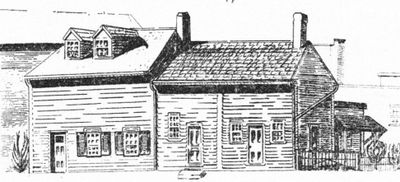
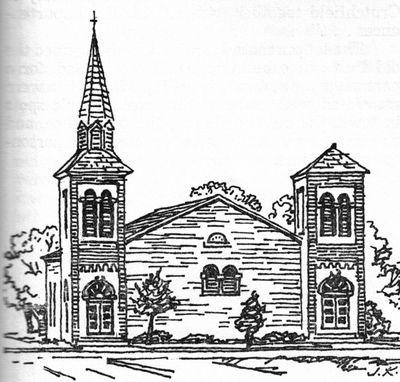
The time had come for the congregation to build their own substantial church building. A lot was purchased at the corner of Walnut and Third Streets which contained the old Post Office which was used as the parsonage for many years. In 1835 the Walnut Street Church, which was located just across the street where the McDowell Regional Medical Center now resides, was built to accommodate the ministry and mission of the Methodists in the Danville area. The foundation of that old church still exists under the original Walnut Street Entrance of the hospital.
In December of 1888 in a meeting of the Board of Stewards, “After general discussion of the question of the desirability of a movement toward a new church, it was the unanimous opinion of the meeting that it was very desirable and on motion a committee of six was appointed to canvas the town for the availability of a church lot. These men were evidently of great faith as the bank balance reported at the meeting was $27.77. The decision made that night was to purchase a lot and build a church at a cost of $31,417.73
In 1889 plans were underway for the new building. In November 1889, the capital campaign was conducted. Within 60 days, ten thousand dollars had been collected. In September of 1890 ground was broken. In July of 1891 the cornerstone of the new church was laid and the church was occupying the same land where the Centennial Memorial Church once stood.
In July of 1891, the cornerstone of the new church was laid with magnificent ceremonies as a large crowd assembled to watch. The exercises began at the old church building. After the dedicatory address by Dr. W.T. Bolling of Covington, Kentucky, the congregation adjourned to the new building, where ceremonies were conducted by Dr. Pearce, the pastor, with Rev. Arnold, the associate pastor, the visiting ministers and members of the official board. The box deposited in the cornerstone contained the following articles:
· A copy of the Bible
· A copy of the Discipline of the Methodist church south
· Hymn and Tune Book in use by the church
· The roll of membership
· A photographic group of the Official board
· The Sunday School roll
· The roll of the Official Board
· Names of the Building Committee
· A copy of the Invitation to the Cornerstone Ceremonies
· Wood from the Dunlap Building, erected upon the site of the Centenial Methodist Church in 1789
· List of Subscribers to the Building Fund
· Cards used in work of the church
· Address on location of Kentucky Wesleyan College at Winchester, Kentucky, 1886, by Reverend E.H. Pearce
· Copies of the Nashville Christian Advocate, Central Methodist, Kentucky Methodist, The Investigator, Danville Advocate and Kentucky Deaf Mute
· Catalogues of Kentucky Wesleyan College, Vanderbilt University, Centre College, Danville Theological Seminary, Caldwell Female College and Hogsett Academy.
· Report and Circular of D and D Construction
· Calendar of Kwansei Gakum Kobe, Japan
· Minutes of the Kentucky Conference of Methodist Church South
· Deaf Mute’s Arithmetic published by pupils of the Institution
· Roll of pastors and official Boards of sister churches in Danville
· Photograph of Old Church Building
· Photograph of first excavation Centenary Memorial Church, September 1890
· The Church and Education Address by J.W. Proctor, before the Kentucky Conference M.E. South, Cynthiana, Kentucky, 1883
· Sunday School Song book, Magazines, etc.
It was almost a year since the last service was held in the old church. An old clipping gave this account of the last meeting: “Last Sunday the Methodists of Danville worshipped for the last time in their old church. This week it is being fitted for a warehouse by purchasers. The last sermon was preached by the pastor, Reverend P.A. Sowell, from Matthew 27:22. A good congregation was present and there was an interesting service. There were a few who were converted to God in that sacred place over fifty years ago, among them Judge N. Sandifer, Mrs. Phebe McNeil and Mrs. Figg. There were tears in many eyes as the congregation turned away and passed out from the walls made sacred by a hundred memories both bright and sad. Next Sunday morning service will be held in the unfinished auditorium room of the church. Temporary seats and accommodations will be made for the service. A full attendance will afford much pleasure.”
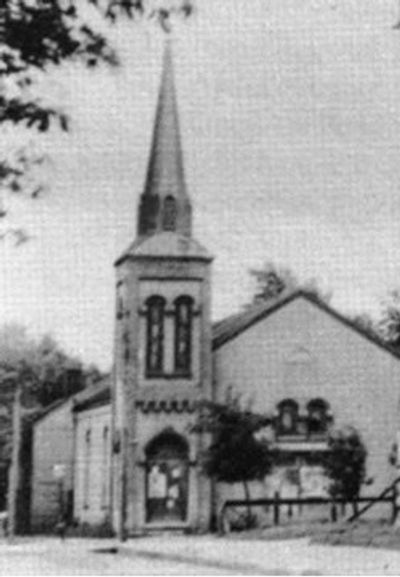
The first service was held on Sunday, June 26, 1892. Our congregation occupied this building and the name was changed to reflect its hundred years’ history to Centenary Methodist Church. In the history of this event it reads: “This new building was to become Centenary because ‘it marked the first Methodist church organized west of the Allegheny Mountains. As a righteous memorial of this event of Divine Providence—to answer gratefully to God for His blessings bestowed in the past, as well as to meet present and future needs of a growing and central congregation—it is proposed to erect during the coming year a new Methodist Church building in the City of Danville, Kentucky, to be known as the Centenary Methodist Church of Danville….’”
The day finally came when the $31,417.73 debt on the new church was paid. The highpoint was reached on June 26, 1905, thirteen years to the date of the first service held at the new church. After the many years of planning and paying, the debt was liquidated. The church celebrated its freedom from debt in a Jubilee Service. An interesting feature of the occasion was the bonfire of the papers relating to the church debt.
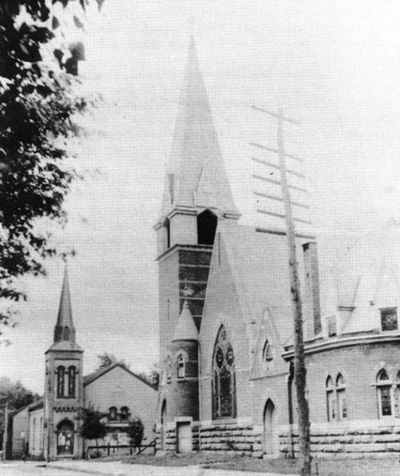
As the years passed, the lack of adequate facilities for the growing membership had become more and more apparent. A church school education wing addition began in December of 1928 and was completed in July, 1930 at a cost of $40,000. In 1988, a fire escape was installed to the second floor of the educational building and smoke detectors were installed as well as in the sanctuary. In 1989, new pew padding, carpeting, repair of choir chairs and subflooring took place in the sanctuary at a cost of $31,300. A special charge conference was called to consider the purchase of the Meade Building at 117 South Third Street, adjacent to the education wing at a cost of $60,000. The building, which had been damaged by fire, was purchased, torn down and a courtyard was constructed in its place.
In 1991, an appointed Building Committee, under the guidance of Associated Designers, architects and engineers, determined that an addition to the educational building was cost prohibitive. An alternate plan included the renovation of the education building ($225,000), improve the bell tower ($50,000) and acquire 15-20 acres of land outside of town ($75,000). The renovation of the education wing would include a new kitchen, enlarged fellowship hall, two restrooms and heating and air conditioning for the basement; renovation of the first floor vestibule and improve the two restroom on the first floor; remove the partitions in the youth room and add a small kitchenette on the second floor. A bequest from the Lorette Horkey estate was to be used to repair the bell tower. A capital funds campaign, “Vision—Third Century” began.
On June 21, 1992, Centenary United Methodist church celebrated the 100th anniversary of our church building and its first church service. A picnic lunch was served following the service.
Since that time the church found itself “land locked” limiting the church to further expansion. The church did all it could with what it had. With that in mind, the church leadership began to search for property that could meet the safety, accessibility and space needs of our growing youth and children population and provided the necessary requirements to carry out our mission.
And today have followed what those who have gone before us have done. Since the early 1890’s our church has passed on numerous opportunities to purchase surrounding property but for whatever reason, we didn’t choose to purchase property when it was available.
So, how did Centenary United Methodist church arrive where they are in 2012?
· First, in the 1980’s God moved upon the heart of Pat Best to include in his will, a trust fund to Centenary.
· Many years later, God moved upon Kathryn Ishmael to do the same and for a period of time we had two trust funds available to us, being faithfully managed by our church.
